 |
|||
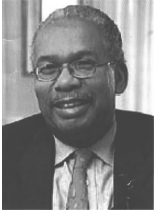
How would it feel to be escorted into high school by paratroopers? Would you volunteer to attend a school where you know you would be harassed every day because of a feature you could not control? Mr. Ernest Green knows, all too well, the answers to those questions. Growing up in a time when “separate but equal” was a pervasive rule, when there were color-specific, separated facilities for every facet of life, his life changed forever with a decision made in his junior year of high school. Born to parents Lothair and Ernest Green, Sr. on September 22, 1941, Ernest grew up to participate in one of the greatest moments of the 20th century civil rights battle. In September of 1957, nine children, who were not like the other children at Little Rock Central High School, entered the place to challenge its segregated system. The number of black students wishing to attend the school was a lot higher earlier that year, with about eighty students voicing interest in studying at Little Rock Central High School. From this eighty, a selective process of interviews narrowed the group down to a mere seventeen students. After further deliberation by the students, eight of the seventeen decided to stay at the local allblack high school, Horace Mann High School. The nine students who decided to continue with their plans to integrate endured Governor Orval Faubus’s National Guardsmen, the Little Rock Police Department, and a mob of angry people before they finally entered the high school. Only a few days after his birthday, Ernest Green finally entered the school; however, this was only possible because he, and his fellow students, were under the auspices of paratroopers sent in by President Eisenhower. Ernest Green graduated that school year and continued to excel from then on. By means of a scholarship, he attended Michigan State University, where he obtained his B.A. in 1962 and his M.A. in 1964. He has also received many honorary degrees and has been on the board of organizations such as the Winthrop Rockefeller Foundation, AfriCare, and the African Development Foundation. Bill Clinton honored Green with the Congressional Gold Medal in 1999. Recently, he spoke to the St. Ignatius Community as part of the Michael V. Kelley ’69 Distinguished Speaker Series. Encouraging us to “broaden our experiences,” he emphasized the importance of using our many strengths and capabilities to benefit the community that surrounds us. He expressed the need for the students to not only use their individual talents, but our collective talents to help our community, to help Cleveland. By setting a great example, Ernest Green showed that even one person could make a difference. |
Front Page
- Tim Mack '90 Wins Gold
- Question and Answer with a Golden Ignatian
- Saddam Hu?
- C.A.T. Counts Hours
- The Killers’ Hot Fuss and the Secret Machines’ Now Here is Nowhere
- Chico’s Team Starts Strong PDF Files
Page 1 | ||